By Admin · Mar 12, 2026
In pharmaceutical manufacturing, quality is the foundation of trust. Tablets and capsules are among the most widely used dosage forms, and ensuring their safety, strength, and consistency is critical. Quality control systems are designed to monitor every stage of production so that each unit released to the market meets strict standards for accuracy and performance.
Because medicines directly impact patient health, even small variations in composition or dosage can lead to serious consequences. This is why pharmaceutical manufacturers implement structured, science driven quality control systems that operate from raw material testing to final product release.
Quality control in tablet and capsule production ensures:
A well established quality framework protects patients and strengthens a company’s credibility in competitive markets.
Quality control begins with incoming raw materials. Active pharmaceutical ingredients and excipients must meet defined specifications before use in production.
Quality control laboratories perform:
Only materials that pass these evaluations are approved for manufacturing. This first checkpoint reduces the risk of formulation errors later in the process.
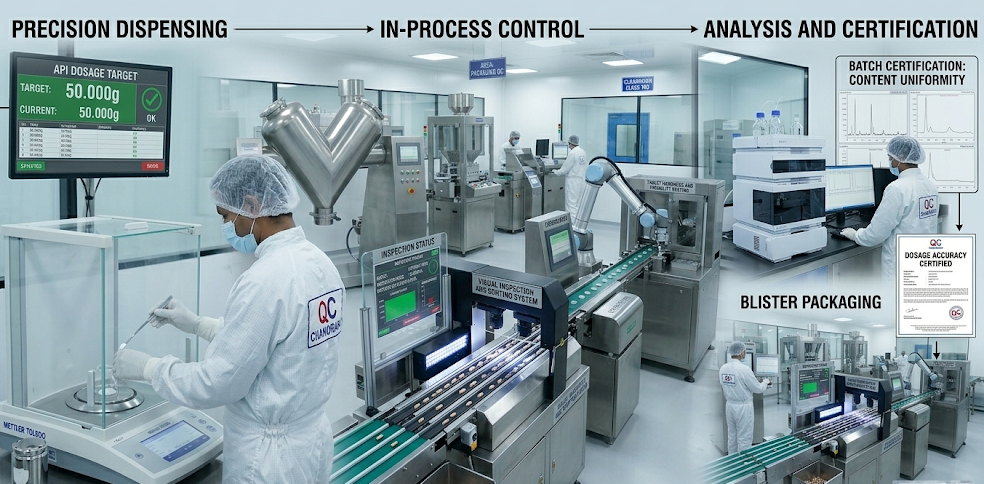
Modern pharmaceutical manufacturing does not rely only on final testing. Instead, quality checks are performed at multiple stages of production to detect variations early.
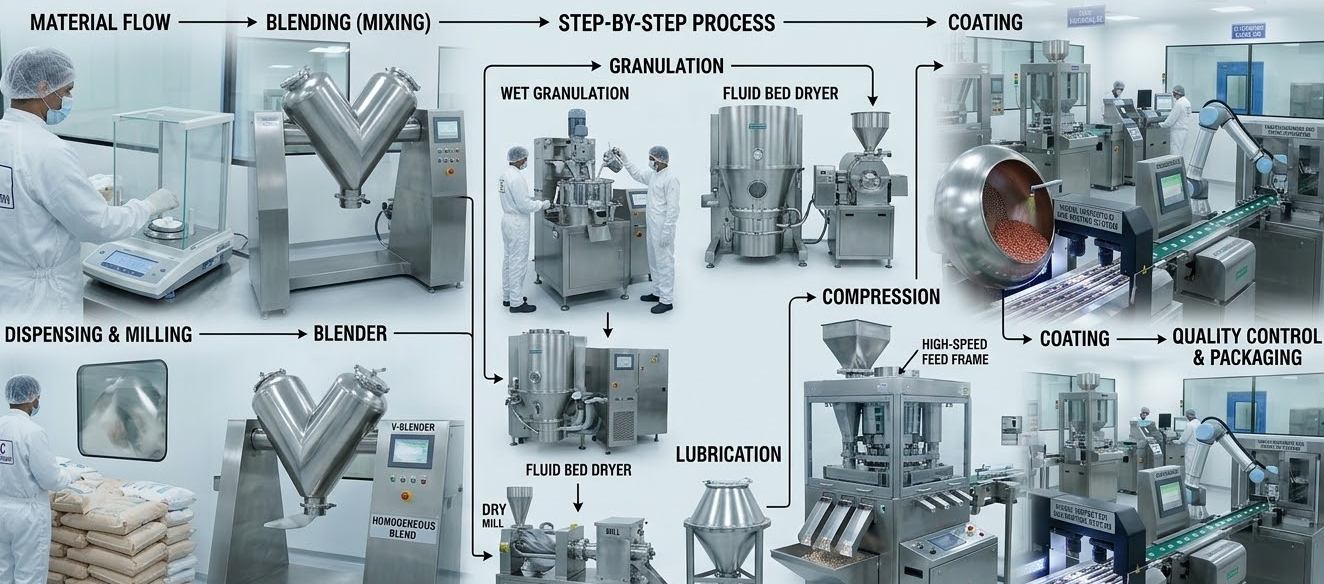
Uniform distribution of the active ingredient is essential for dosage accuracy.
In process quality checks include:
These steps confirm that the active compound is evenly distributed before further processing.
Granulation improves powder flow and compression properties.
Granulation monitoring involves:
Maintaining consistent granule characteristics supports accurate tablet compression and capsule filling.
Tablet compression machines operate with high precision.
Compression stage testing includes:
Advanced machines often include automated weight monitoring systems that adjust settings instantly if deviations occur.
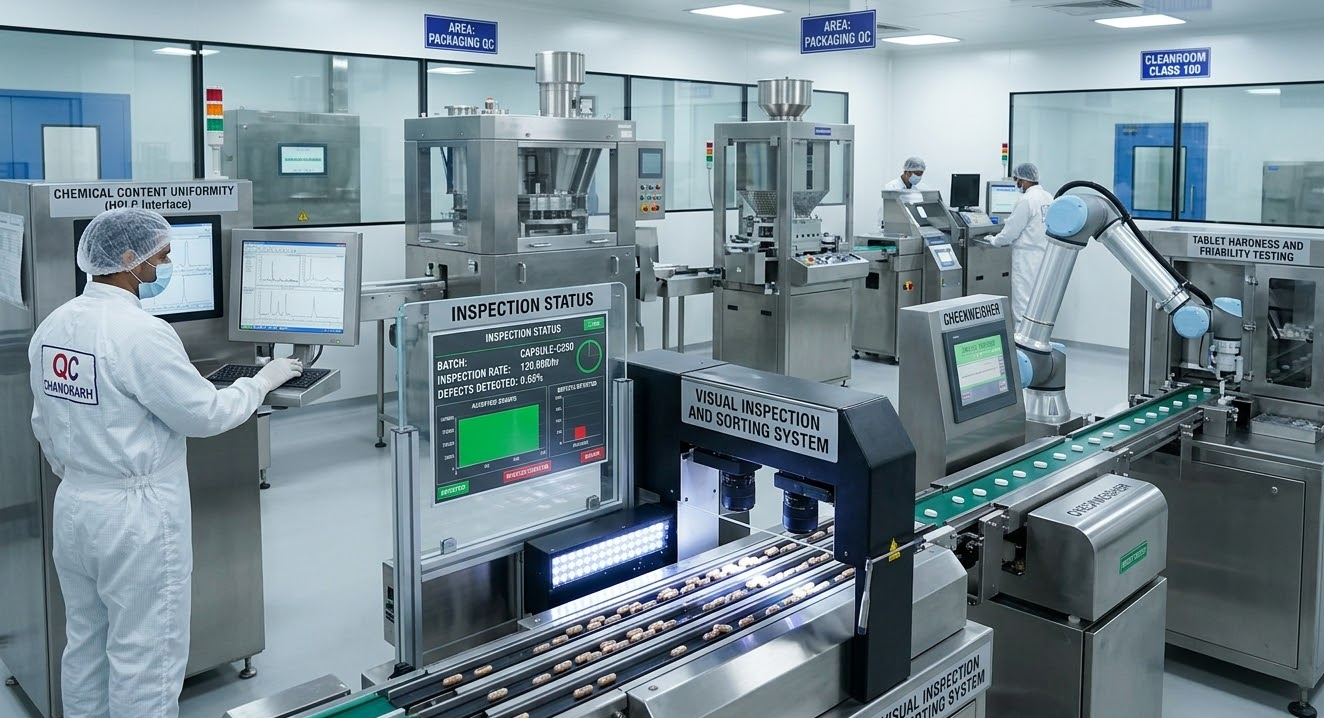
Capsule filling also requires careful monitoring to maintain uniform dosage.
Capsule quality checks include:
Automated systems detect irregular fills and prevent defective units from moving forward.
Before release, every batch undergoes comprehensive laboratory evaluation.
Finished product quality testing includes:
Only batches that meet pharmacopeial and internal quality standards are approved for distribution.
Stability testing ensures that tablets and capsules maintain their potency and effectiveness throughout their shelf life.
Stability studies evaluate:
Samples are stored under controlled environmental conditions and tested at scheduled intervals. These studies determine expiry dates and recommended storage guidelines.
Reliable equipment is essential for accurate production and testing.
Calibration and maintenance activities include:
Preventive maintenance programs reduce mechanical errors and support consistent performance.
Controlled production environments reduce contamination risks.
Environmental monitoring systems track:
Strict cleanroom protocols, sanitation procedures, and air filtration systems protect product integrity and ensure compliance with Good Manufacturing Practices.
Detailed documentation is a key pillar of pharmaceutical quality systems.
Batch records typically include:
Traceability systems allow each batch to be tracked from raw material to finished product. This transparency supports regulatory inspections and builds accountability.
Manufacturers that integrate structured documentation, validated processes, and scientific monitoring create strong quality driven operations. Companies such as Servochem Pharma continue to strengthen their production systems by combining technical expertise with disciplined quality control practices.
Technology has significantly enhanced quality control in tablet and capsule production.
Advanced quality tools include:
These systems improve accuracy, reduce human error, and allow faster corrective actions when deviations occur.
Quality control refers to systematic testing and monitoring of raw materials, in process stages, and finished products to ensure safety, potency, and regulatory compliance.
Content uniformity ensures that each tablet or capsule contains the correct amount of active ingredient, which is essential for consistent therapeutic effectiveness.
Finished products undergo assay testing, dissolution testing, disintegration testing, friability testing, and microbial analysis where required.
Manufacturers use precise weighing systems, validated blending processes, automated compression or filling machines, and continuous in process quality checks.
Stability testing confirms that medicines maintain their strength, safety, and effectiveness throughout their shelf life under defined storage conditions.
Quality control systems used in tablet and capsule production are designed to ensure safety, precision, and consistency at every stage of manufacturing. From raw material testing to finished product approval, each checkpoint contributes to maintaining dosage accuracy and product reliability.
Pharmaceutical manufacturers that prioritize structured quality frameworks, skilled personnel, and advanced infrastructure strengthen their credibility in domestic and global markets. Through disciplined monitoring and continuous improvement, responsible companies help deliver safe and effective medicines to patients worldwide.